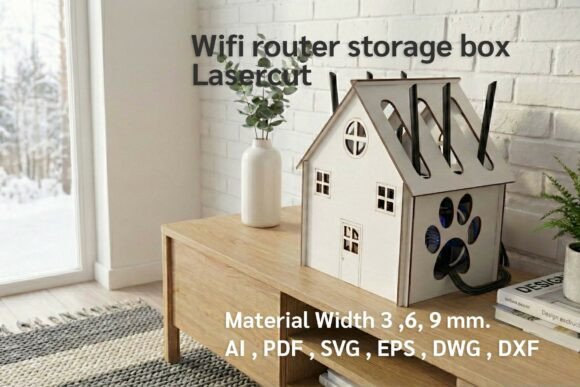
Wifi Router Box Laser Cut File
As a designer who spends more time than I care to admit staring at stitch charts and testing thread tensions, I don’t just look for "pretty" designs. I look for viability. I look for products that sell, projects that hold up in the wash, and aesthetics that elevate a brand. When I first pulled up the Wifi Router Box Laser Cut File, my initial reaction was pragmatic: this isn’t your typical floral motif or inspirational quote found on every Etsy listing. It is a structural, architectural piece with a very specific function. However, as I began to deconstruct how this design translates from a digital vector into a tangible handmade product, I realized there is a fascinating crossover potential here for makers who understand the value of functional decor.
The core concept of this file is to create a decorative wooden house that hides a router and organizes cables. While the primary medium implied by the title is laser cutting, the visual language—clean lines, geometric structure, and a distinct silhouette—makes it an intriguing candidate for translation into textile arts. For those of us in the craft business, the question isn't just "can I stitch this?" but "does this solve a problem for my customer in a way that feels premium?" The answer, surprisingly, leans toward yes, provided we approach it with the right technical strategy.
First Impressions and Visual Personality
The mood of the Wifi Router Box Laser Cut File is undeniably modern and minimalist. It evokes a sense of order amidst chaos, which is exactly the emotional hook needed for home organization products. Visually, the design relies on strong outlines and likely large open spaces where the "walls" of the house would be. This creates a high-contrast opportunity for embroidery. Unlike dense fill patterns that can overwhelm a fabric’s texture, this design allows the base material to breathe.
When I imagine this rendered in thread, I see it working best as a large-scale applique or a bold outline design. The aesthetic fits perfectly into contemporary nursery themes, modern farmhouse kitchens, or tech-forward home offices. It moves away from the cliché of cute animals or generic clouds and offers something that looks intentional and curated. For an Etsy seller looking to differentiate their shop, this kind of thematic specificity is gold. It signals to the buyer that you understand their need for both style and utility.
Real-World Application: Beyond the Woodshop
Let’s talk about real project use. How does this embroidery file perform when moved from wood to fabric? I recently considered using a similar structural concept for a custom apron line aimed at tech-savvy homeowners who love to cook but hate cluttered counters. Imagine a heavy-duty canvas apron featuring the router box design stitched prominently on the bib area. The contrast between the rugged fabric and the precise, clean lines of the design would create a striking visual.
Another scenario involves personalized gifts for new homeowners. A set of embroidered kitchen towels or a pillow cover featuring this design could serve as a unique housewarming gift. It acknowledges the reality of modern life—the ubiquitous router—while turning it into a charming decorative element. This is the kind of product that drives engagement because it feels relatable yet elevated. It transforms a mundane object (a wifi router) into a conversation starter.
For custom apparel, think oversized sweatshirts or tote bags. The design’s blocky nature works well as a chest pocket placement or a large back print. It avoids the fatigue of small, intricate details that get lost on curved surfaces like caps or sleeves. Instead, it commands attention through its shape and negative space. This makes it ideal for commercial embroidery where consistency across multiple units is key. Large, simple shapes are easier to digitize consistently than complex gradients or tiny text.
Technical Considerations for Stitching
However, translating a laser-cut vector into an embroidery project requires careful planning. The original file is designed for CNC routers, meaning it likely features thin cut lines. In embroidery, thin lines can become fragile or disappear entirely if not treated correctly. Here is what I recommend before you hit the start button:
- Stitch Density and Type: Do not attempt to replicate fine cut lines with standard running stitches unless you are using a high-quality topstitch thread. Instead, consider converting the main outlines into a satin stitch for durability, or use a wide running stitch to mimic the laser cut effect without risking breakage. If the design includes internal details, evaluate whether they are large enough to hold their shape after washing.
- Hoop Size Constraints: Ensure your machine’s hoop can accommodate the full width of the router box. If the design is too wide, you may need to split it, which can ruin the visual continuity. Always check the hoop size requirements against your physical capabilities.
- Fabric Selection: This design demands stability. Use a sturdy cotton canvas, denim, or a heavy-weight fleece for apparel. Avoid thin, stretchy knits unless you are using a substantial tear-away or cut-away stabilizer. The weight of the thread, especially if you opt for metallics or thick wool blends, can distort lightweight fabrics.
Where to Exercise Caution
Not every surface is suitable for this level of structural design. I would advise against using this on small items like baby booties or delicate handkerchiefs. The scale of the router box is inherently "adult" and functional; shrinking it down can make it look cramped rather than clever. Similarly, avoid placing this on highly textured fabrics like bouclé or shaggy rugs, as the background noise will compete with the clean lines of the design.
Another critical point is color contrast. Since the design relies on silhouette, low-contrast thread colors (like grey on black) will fail. You need crisp distinction. I often test designs in black and white mockups to ensure the shapes read clearly. If the router box doesn’t pop in monochrome, it won’t work in color either.
Value and Market Positioning
From a business perspective, the Wifi Router Box Laser Cut File offers a unique selling proposition. It bridges the gap between Other Home Decor categories and practical utility. Customers are increasingly looking for products that declutter their visual space. By offering an embroidered version of this organizer, you are selling peace of mind alongside aesthetics.
This design also lends itself well to digital product sellers. Even if you aren’t stitching it yourself, creating printable mockups of this design on various backgrounds can attract buyers looking for wall art concepts or DIY guides. It expands your reach beyond just the local craft fair crowd into the global digital marketplace.
Final Designer Notes
Before committing to a production run, always test the design on scrap fabric. Check the thread colors under different lighting conditions. Inspect the corners—are they sharp enough? Does the stabilizer leave any residue? Confirm your licensing terms if you plan to sell finished goods. Is this a personal use file only, or does it allow commercial distribution?
In conclusion, the Wifi Router Box Laser Cut File is more than just a novelty item. It is a versatile asset for designers willing to adapt its structural integrity for textile applications. With the right fabric choice, appropriate stitch types, and a clear understanding of its scale, this design can elevate your small shop product line from generic to distinctive. It proves that even the most utilitarian objects can be reimagined as beautiful, functional art.